

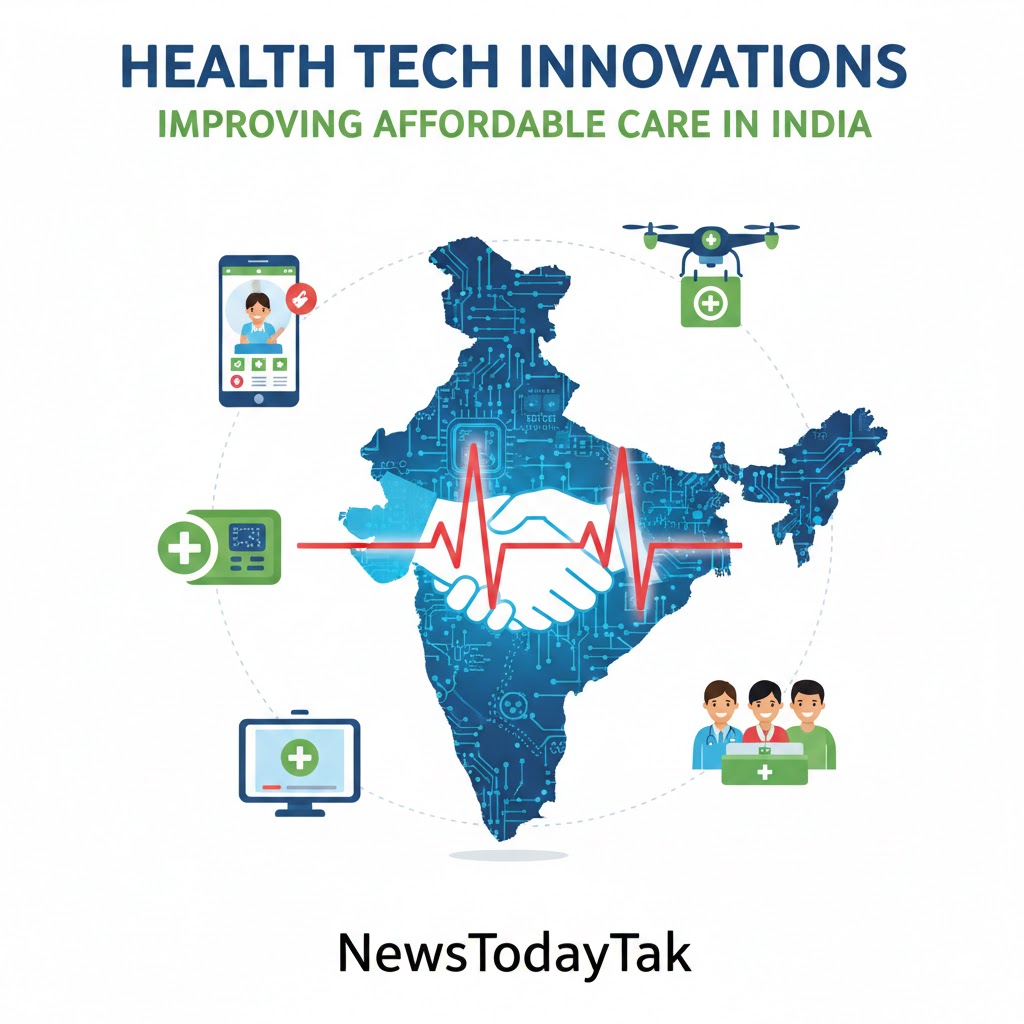
India’s healthcare system is undergoing a powerful transformation driven by health technology innovations. With a vast population, regional disparities, and rising medical costs, the need for affordable and accessible healthcare has never been greater. Health tech solutions are now bridging long-standing gaps by bringing quality care closer to people, reducing costs, and improving outcomes across urban and rural regions. This shift is not only modernizing healthcare delivery but also redefining how patients experience care in India, a development widely discussed by platforms like NewsTodayTak as a sign of long-term systemic change.
Digital Health Records and Interoperability
One of the most impactful innovations has been the adoption of digital health records. Electronic health records allow patient data to be stored securely and accessed by authorized providers anywhere in the country. This reduces duplication of tests, speeds up diagnosis, and lowers overall treatment costs. Interoperability standards ensure that hospitals, clinics, and diagnostic centers can share information seamlessly. As a result, patients no longer need to carry physical files, and doctors can make informed decisions faster, which is especially important for chronic disease management.
Government-backed initiatives such as Ayushman Bharat have accelerated digital adoption by linking beneficiaries with digital IDs and standardized records. This ecosystem enables continuity of care and improves efficiency for both providers and patients.
Telemedicine Expanding Access to Care
Telemedicine has emerged as a game changer for affordable care, particularly in remote and underserved regions. Virtual consultations connect patients with qualified doctors without the need for long-distance travel, saving time and money. For primary care, mental health support, and follow-up visits, telemedicine significantly reduces out-of-pocket expenses.
During recent years, teleconsultation platforms have scaled rapidly, integrating video calls, e-prescriptions, and digital payments. These services are now available in multiple regional languages, making them inclusive and user-friendly. For many families, telemedicine is the first point of contact with the healthcare system, ensuring early intervention and preventing complications that can become costly later.
Artificial Intelligence in Diagnosis and Screening
Artificial intelligence is improving diagnostic accuracy while keeping costs low. AI-powered tools analyze medical images, pathology slides, and patient data to assist doctors in detecting diseases at early stages. In radiology, AI algorithms help identify abnormalities in X-rays and CT scans within seconds, reducing turnaround time and human error.
In preventive care, AI-driven screening tools are being used for eye diseases, tuberculosis, and cardiovascular risk assessment. Early detection lowers treatment costs and improves survival rates. These innovations are particularly valuable in high-volume public hospitals, where clinician workloads are heavy and resources are limited.
Mobile Health Apps Empowering Patients
Mobile health applications are empowering individuals to take charge of their health. Apps focused on fitness, nutrition, medication reminders, and chronic disease management provide personalized insights at low or no cost. Patients with diabetes, hypertension, and asthma can monitor their conditions daily and share data with healthcare providers remotely.
These apps also promote preventive care by encouraging healthy habits and timely checkups. For low-income users, free versions with essential features ensure inclusivity. Over time, better self-management reduces hospital visits and long-term healthcare expenses.
Affordable Diagnostics Through Point-of-Care Devices
Innovations in diagnostics have made testing faster and more affordable. Point-of-care devices enable tests to be conducted at clinics, pharmacies, or even at home, eliminating the need for expensive laboratory infrastructure. Rapid tests for blood sugar, pregnancy, infectious diseases, and cholesterol are now widely available.
These devices reduce waiting times and enable immediate clinical decisions. In rural settings, they are particularly impactful, as patients can receive diagnosis and treatment during a single visit. This convenience minimizes indirect costs such as travel and lost wages.
Health Tech Startups Driving Cost Efficiency
India’s health tech startup ecosystem is a major driver of affordable care. Startups are focusing on scalable solutions such as low-cost medical devices, AI-assisted diagnostics, and digital platforms for appointment booking and pharmacy services. Competition among startups encourages innovation and keeps prices competitive.
Collaborations with public health systems and NGOs allow these solutions to reach marginalized communities. Policy think tanks like NITI Aayog have supported pilot programs that test and refine these technologies before national rollout, ensuring sustainability and impact.
Remote Monitoring and Wearable Technology
Wearable devices and remote monitoring tools are transforming chronic care management. Devices that track heart rate, oxygen levels, sleep patterns, and physical activity provide continuous health data. Doctors can monitor patients remotely and intervene early when anomalies are detected.
For elderly patients and those with chronic illnesses, remote monitoring reduces hospital admissions and emergency visits. This proactive approach lowers healthcare costs while improving quality of life. As device prices decrease, adoption is expanding beyond urban elites to middle- and lower-income groups.
Data Analytics Improving Public Health Planning
Health data analytics is strengthening public health planning and resource allocation. Aggregated and anonymized data from hospitals, labs, and apps help authorities identify disease trends, predict outbreaks, and plan interventions. Efficient planning prevents wasteful spending and ensures that resources are directed where they are needed most.
Data-driven insights also support preventive campaigns and vaccination drives. By targeting high-risk populations, health systems can achieve better outcomes with limited budgets.
Challenges and the Road Ahead
Despite significant progress, challenges remain. Data privacy, digital literacy, and infrastructure gaps need continuous attention. Ensuring equitable access across regions requires investment in connectivity and training for healthcare workers and patients alike.
However, the trajectory is promising. With supportive policies, public-private partnerships, and continuous innovation, health tech will continue to make healthcare more affordable and accessible. As NewsTodayTak has highlighted, these advancements are not just technological upgrades but foundational changes that can improve the lives of millions across India.
Conclusion
Health tech innovations are reshaping affordable care in India by expanding access, improving efficiency, and reducing costs. From telemedicine and AI diagnostics to mobile apps and wearable devices, technology is empowering patients and providers alike. As these solutions scale responsibly, India is moving closer to a future where quality healthcare is within reach for all.